When it comes to AI tools for students in 2026, ChatGPT remains first in everyone’s mind. Launched by OpenAI back in late 2022, it has since grown into a full-blown academic companion — one that all students around the world rely on daily for everything from essay writing to solving complex calculus problems and sometimes even as a chatting partner. But is it actually worth its hype? Let’s break it down honestly.
What Category Does ChatGPT Fit Best?
Out of all the category out their it shines brightest as an Academic Tutoring and Writing Assistant. It’s not just a chatbot — it’s more like having a patient tutor available at 3 AM who won’t judge you for not knowing what a thesis statement is. Whether you’re stuck on a history essay, need a concept explained five different ways, or want feedback on your draft, ChatGPT handles it all in one place.
The Good Stuff: Where ChatGPT Actually Delivers
1. Explaining Complex Topics in Plain English
This is genuinely where ChatGPT is hard to beat. Ask it to explain quantum entanglement like you’re twelve years old, and it’ll do exactly that — clearly, patiently, and with examples. For students in STEM especially, this is a game-changer. No more staring blankly at a textbook until it turns transparent.
2. Writing Support Without Doing the Work for You (If You Use It Right)
ChatGPT can help you outline essays, improve sentence structure, fix grammar, and suggest stronger arguments. If used responsibly, it’s like a writing tutor in your pocket which you can use whenever you want. It’s one of the most capable AI writing assistants for students currently available.
3. 24/7 Availability
No office hours. No scheduling. No waiting. This alone makes it extremely valuable for students managing part-time jobs, family responsibilities, or different time zones.
4. Multi-Subject Range
From Shakespeare analysis to Python debugging to economic theories — ChatGPT honestly covers a wide academic range. It’s one of the few AI tools for students in 2026 that doesn’t feel limited to just one subject.
5. GPT-4o and Voice Mode
The newer versions support voice conversations, image analysis, and file uploads. You can photograph a tricky math problem and have it created the solution step-by-step — that’s genuinely impressive for exam prep.
The Problems: Where ChatGPT Falls Short
1. Hallucinations — It Can Confidently Be Wrong
This is the biggest issue, and every student needs to know about it. ChatGPT sometimes presents inaccurate information with total confidence. It has been known to mention papers that don’t exist, give wrong dates, or misrepresent scientific consensus. Always verify facts from a real source before putting them in your assignment.
2. Knowledge Cutoff Limitations
Despite improvements, the free version still has some limitations around recent events. If you’re writing about something that happened in the last year, ChatGPT may not have the full picture without web browsing enabled.
3. It Can Make You Intellectually Lazy
This is less a flaw of the tool and more of a student habit problem — but it’s real. If you ask ChatGPT to write your essay, it will. And it’ll sound decent. But you won’t learn anything, and academic integrity policies are cracking down hard on AI-generated submissions in 2026.
4. Inconsistency Across Sessions
ChatGPT doesn’t remember previous conversations by default (unless memory is enabled). Students working on long projects often find this frustrating — you have to re-explain your context every time.
5. Pricing
The free tier is noticeably limited compared to GPT-4o. For full access to the best features, you have to get a monthly subscription that not every student can comfortably afford.
What Real Students Are Saying
Across Reddit and Quora, student opinions on ChatGPT are genuinely mixed — which tells you a lot.
On Reddit’s r/college, one user summed it up well: “It’s the best study buddy I’ve ever had for understanding concepts, but I stopped using it to write anything because I stopped learning.” That tension between convenience and learning is a theme you see everywhere in student discussions.
Another Redditor on r/students pointed out: “The hallucination problem is real. I cited a study it gave me and my professor knew immediately it didn’t exist. Super embarrassing.”
Over on Quora, a student studying medicine wrote that they use ChatGPT as a first-pass explainer: “I never take it as final truth, but it gets me oriented fast before I dive into actual textbooks.” That’s probably the most sensible approach.
A computer science student on Reddit noted: “For debugging code and understanding algorithms, honestly nothing touches it. It’s saved me hours.”
A student also complains: “with newer versions of ChatGPT it just getting more and more worse”
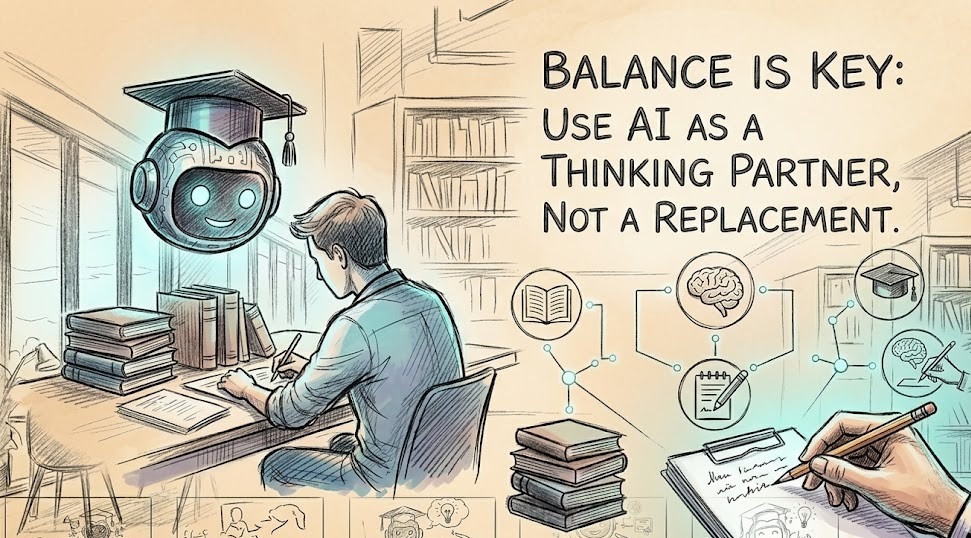
The consensus? Students who use it as a thinking partner rather than a work replacement get the most value out of it.
The Verdict: Should Students Use ChatGPT in 2026?
As one of the most widely used AI tools for students in 2026, ChatGPT earns its reputation — but with cautions. It’s exceptional at tutoring, explaining, brainstorming, and polishing. It’s risky when used as a replacement for your own thinking or as a source of factual information without verification.
Think of it less like a shortcut and more like a knowledgeable friend who sometimes makes things up. Useful? Absolutely. Trustworthy without double-checking? Not quite.
Rating: 8/10 — Highly recommended as a learning aid and writing assistant, with the understanding that critical thinking still has to come from you.
Have a different experience with ChatGPT? Drop your thoughts in the comments — especially if you’re a student using it in 2026.